
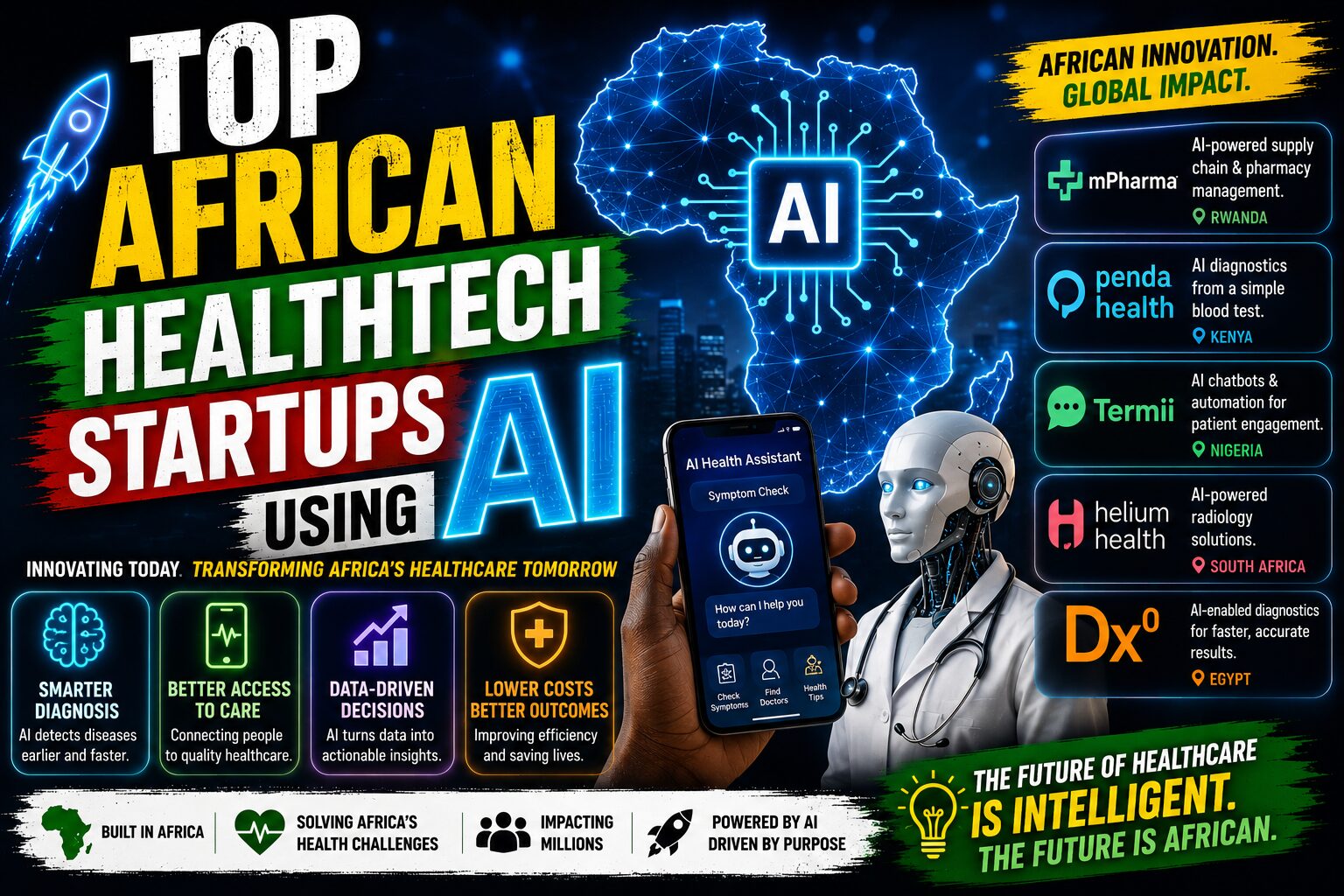
Top African HealthTech Startups Using AI
By Dr Stephanie Owusu Ankomah
Medical Doctor | Medical Writer, AI Doctor Africa
Artificial intelligence is rapidly transforming healthcare across Africa. While the continent continues to face challenges such as shortages of healthcare professionals, limited access to specialist care, fragmented health data, and rising rates of chronic diseases, a new generation of HealthTech startups is developing AI-powered solutions tailored to African realities.
These companies are not simply copying technologies developed elsewhere. They are building solutions that address local healthcare challenges, from counterfeit medicines and diagnostic support to pharmacy access, health data analytics, and telemedicine.
Here are some of the African HealthTech startups leading this transformation.
1. MinoHealth AI Labs (Ghana)


MinoHealth AI Labs is one of Ghana’s best-known AI healthcare companies. It develops artificial intelligence tools that support medical imaging, disease detection, and clinical decision-making.
The company has worked on AI models capable of analysing medical images to assist healthcare professionals in identifying abnormalities more quickly. Its vision is to improve diagnostic capacity, particularly where access to specialist radiologists is limited.
Rather than replacing clinicians, MinoHealth focuses on helping healthcare professionals make faster and more informed decisions.
2. RxAll (Nigeria)


RxAll tackles one of Africa’s most persistent healthcare problems—counterfeit and substandard medicines.
Using artificial intelligence, hyperspectral imaging, and machine learning, its portable RxScanner can verify the authenticity and quality of medicines within seconds. This technology helps pharmacies, distributors, regulators, and healthcare providers detect fake medicines before they reach patients.
Improving medicine quality is just as important as improving access to healthcare.
3. Famasi Africa (Nigeria)


Famasi Africa is building an AI-enabled digital pharmacy platform that makes it easier for patients to locate prescribed medicines, arrange home delivery, and connect with pharmacies.
Its founders recognised that many patients struggle not because treatment is unavailable, but because finding the right medication is difficult. AI helps optimise medicine discovery, inventory matching, and patient access.
4. PBR Life Sciences (Kenya)


PBR Life Sciences focuses on one of healthcare’s most valuable resources—data.
Using AI and advanced analytics, the company helps pharmaceutical organisations understand medicine usage, disease patterns, and healthcare trends across African markets. Better data supports improved forecasting, supply-chain planning, and public health decision-making.
5. Zuri Health (Kenya)


Zuri Health combines telemedicine with AI-enabled digital health services delivered through SMS, WhatsApp, and mobile applications.
Patients can access doctors, laboratory services, pharmacies, and health advice using technologies already familiar to millions of Africans.
By reducing barriers to care, the company is helping expand healthcare access in underserved communities.
6. Babyl Rwanda


Babyl has become one of Africa’s most recognised digital healthcare platforms.
Its services combine telemedicine, digital consultations, electronic medical records, and AI-supported triage to improve access to healthcare.
Patients can consult clinicians remotely, reducing unnecessary travel while improving access to medical advice.
7. Ghana Vitals
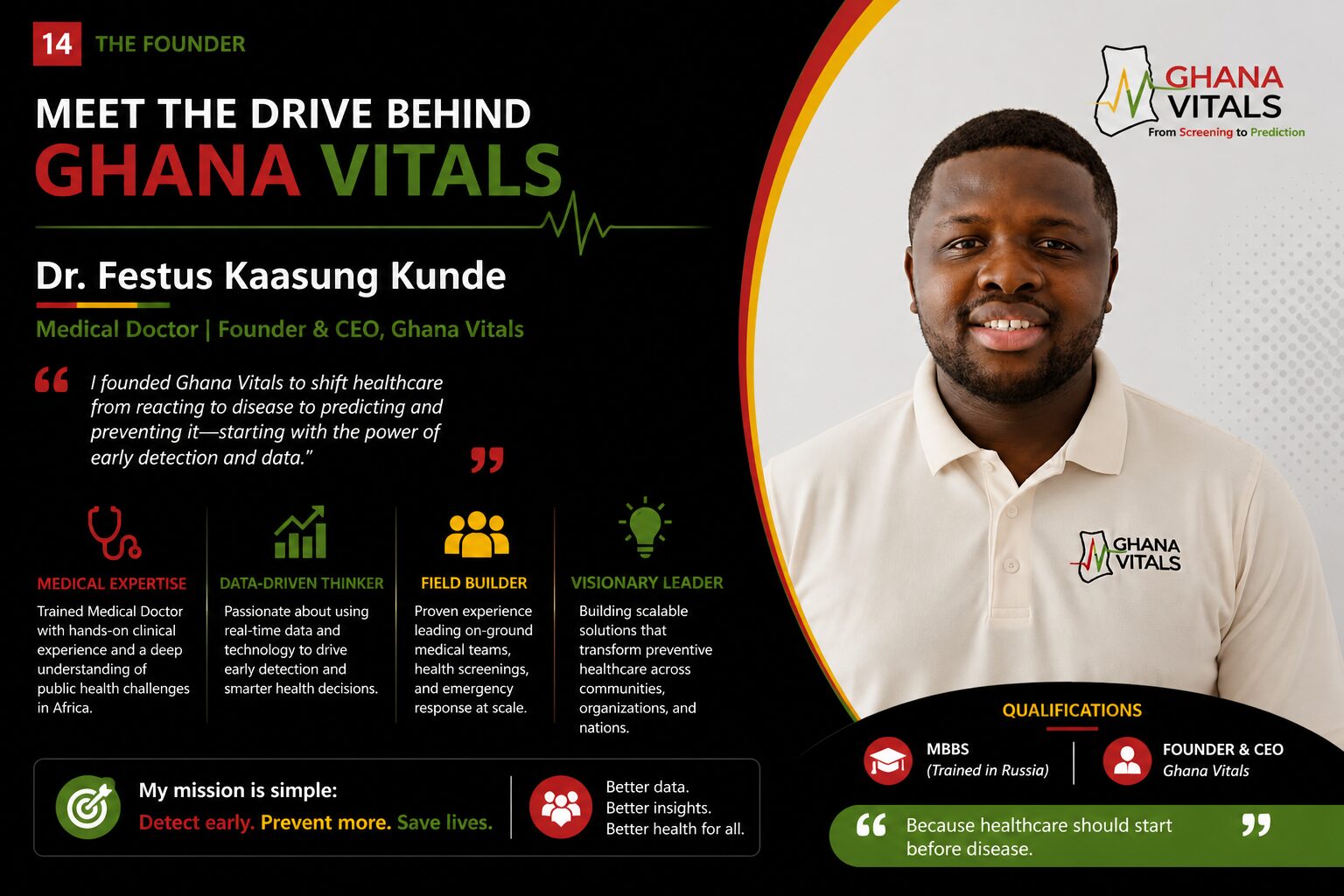
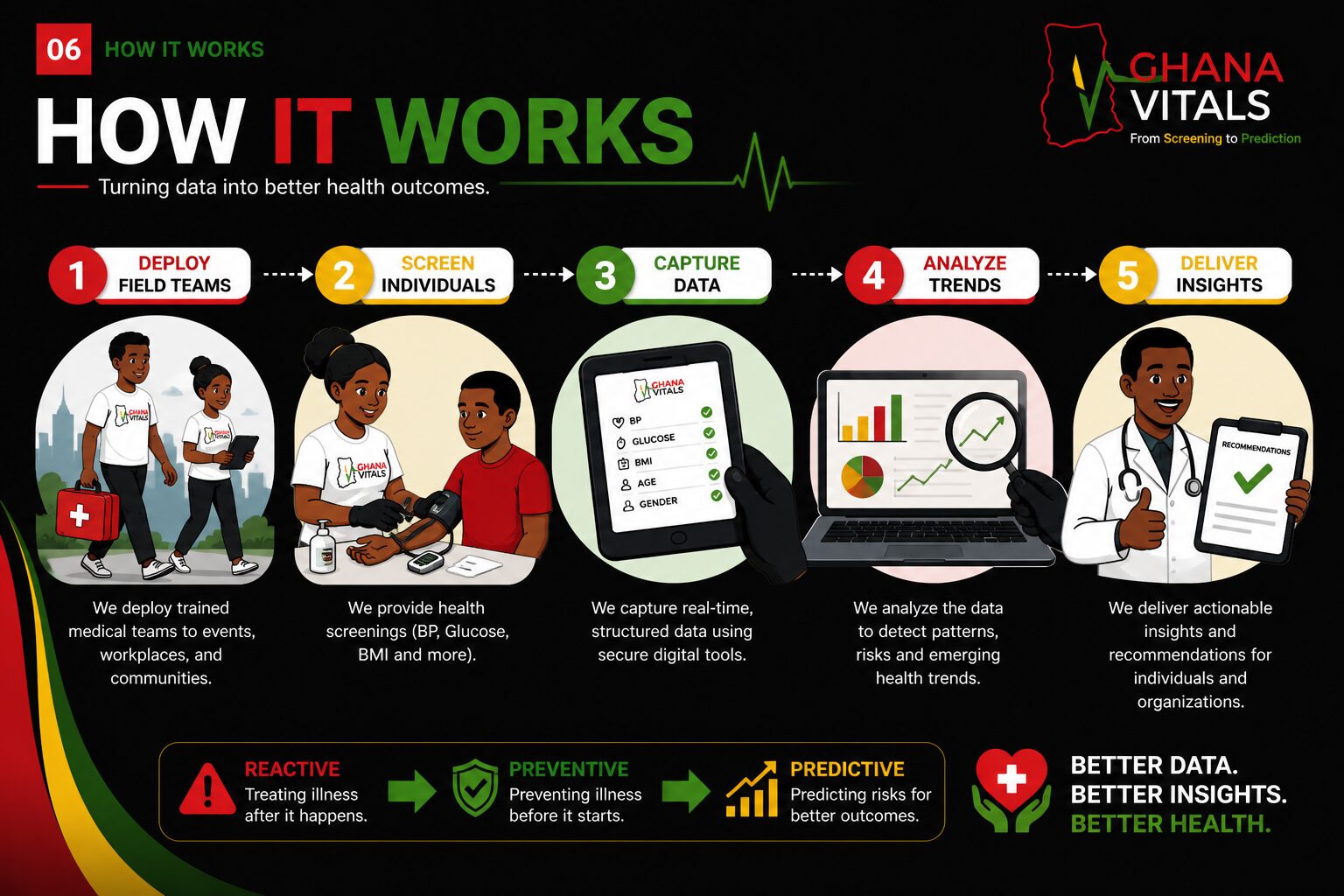
Ghana Vitals is a preventive HealthTech initiative building Ghana’s community-based preventive healthcare infrastructure through health screening, early disease detection, longitudinal health data, and on-site medical support.
The organisation brings essential services closer to communities, workplaces, institutions, and public events through blood pressure checks, blood glucose testing, body mass index assessment, vital-sign monitoring, health education, and referral of high-risk individuals.
As its health-data system develops, Ghana Vitals plans to use artificial intelligence to identify disease-risk patterns, support personalised follow-up, analyse community health trends, and help healthcare teams prioritise people at increased risk of conditions such as hypertension and diabetes.
Unlike AI platforms focused mainly on hospital diagnosis, Ghana Vitals applies technology to prevention. Its long-term vision is to combine community screening, responsible health-data analytics, and AI-supported risk prediction to detect disease earlier and strengthen preventive healthcare across Ghana and eventually other African countries.
What Makes African AI HealthTech Different?
Unlike many AI healthcare companies elsewhere, African startups are often built around practical challenges that directly affect patient care.
Their priorities include:
- Expanding healthcare access.
- Supporting healthcare workers.
- Detecting diseases earlier.
- Fighting counterfeit medicines.
- Improving pharmacy access.
- Strengthening health data.
- Reducing costs.
- Reaching rural communities.
These innovations recognise that Africa’s greatest healthcare needs are not always cutting-edge robotics or expensive hospital technologies. Often, the biggest impact comes from improving primary healthcare, diagnostics, medicine access, and health information systems.
Challenges Facing AI HealthTech Startups
Despite encouraging progress, these startups face significant barriers.
Common challenges include:
- Limited access to funding.
- Fragmented healthcare data.
- Regulatory uncertainty.
- Poor internet connectivity.
- Limited computing infrastructure.
- Data privacy concerns.
- Difficulty integrating with existing health systems.
- Shortages of AI and healthcare talent.
Many companies must also demonstrate that their AI systems perform accurately across diverse African populations rather than relying solely on data collected elsewhere.
The Road Ahead
Africa’s AI HealthTech ecosystem is still young, but it is growing rapidly. Increasing investment, improved digital infrastructure, stronger partnerships between healthcare providers and technology companies, and supportive government policies could accelerate innovation across the continent.
The next generation of African startups is likely to focus on:
- AI-assisted diagnostics.
- Clinical decision support.
- Precision public health.
- Remote patient monitoring.
- Predictive disease surveillance.
- Hospital workflow optimisation.
- Maternal and child health.
- Mental health.
- Drug discovery.
- Personalised medicine.
Related Articles
- How African Doctors Can Use AI in Daily Practice
- AI in African Healthcare: Opportunities and Challenges
- The Future of AI in Ghanaian Healthcare
- AI for Community Health Workers in Africa
- AI for Rural Healthcare in Africa
About the Author
Dr Stephanie Owusu Ankomah is a Medical Doctor, Medical Writer at aidoctorafrica, and a Healthcare Management MSc Student. She holds an MD from Stavropol State Medical University, Russia (2024), and is currently pursuing an MSc in International Healthcare Management in Germany, with hands-on experience supporting hospital operations, patient care coordination, clinical documentation, and multidisciplinary healthcare teams across outpatient clinics, wards, emergency care, surgery, and paediatrics.
AI Doctor Africa | aidoctorafrica.com
Medical Disclaimer: For educational purposes only. AI tools do not replace clinical supervision, verified study resources, or your medical school’s academic guidance. Always verify clinical facts against authoritative primary sources.