

AI for Medical Licensing Examinations: MDC Ghana, MDCN Nigeria, HPCSA South Africa, USMLE, and the UK’s PLAB
By Dr Festus Kaasung Kunde, MD | Stavropol State Medical University
Medical Doctor | AI in Healthcare Advocate | Founder, AI Doctor Africa & Ghana Vitals
Published: June 2026 | Reading Time: 22–28 minutes | Category: AI for Doctors
Quick Summary
Most African doctors will sit at least two licensing examinations in their career — one to practise at home, one to move abroad. This article covers all five major examinations: MDC Ghana, MDCN Nigeria, HPCSA South Africa, USMLE (Steps 1 and 2 CK), and PLAB 1 and 2. For each exam, you will find the exact format, the current pass rates, the specific AI preparation strategy that works, and the prompts and tools that save the most time. This is the guide I wish I had when I was preparing for the MDC.
Every African Doctor Faces at Least Two Licensing Battles
Here is a reality that nobody talks about enough in African medical training. You work for six years, and then graduate. Your internship awaits you. You survive ward rounds, night calls, difficult cases, and the relentless pressure of a resource-constrained healthcare system.
And then you find out that the rest of the world wants you to prove yourself all over again.
If you want to practise in Ghana, you have to sit for the GMDC exam. Did you train abroad—in Russia, Ukraine, Cuba, China, Egypt, India? —The same applies. If you later want to move to Nigeria for specialist training or a hospital appointment, you sit the MDCN assessment. If South Africa calls, the HPCSA board exam is waiting. And if your ambition eventually reaches London or New York — and for many African doctors it does, because the NHS and US residency programmes actively recruit from Africa — then PLAB and USMLE become the new mountains to climb.
Foreign Trained Wahala
I know this personally because I completed my MD at Stavropol State Medical University in Russia in 2025, returned to Ghana, and began preparing for the MDC licensing examination. Currently, I am navigating exactly the exam pathway I am writing about. Furthermore, I understand the anxiety, the time pressure, and the resource constraints that make exam preparation genuinely hard for doctors who are simultaneously working, paying bills, and trying to build a life.
AI does not make these exams easy. Nothing makes these exams easy. However, AI does significantly change the economics of preparation. It gives you unlimited practice questions at any hour and explains concepts at exactly the depth you need. AI simulates clinical stations with you as the candidate. It analyses your weak areas and builds targeted revision plans. Consequently, the gap between an African doctor preparing alone with limited resources and one with access to expensive coaching programmes narrows considerably.
The Full Picture
This article gives you the full picture — every exam, every format, every AI strategy, and the specific prompts that work.
Personal note: I am currently preparing for the MDC Ghana examination. Every strategy in the Ghana section of this article is one I am actively using. I am writing this as a fellow candidate, not as someone looking back from a comfortable distance.
All Five Exams at a Glance: Format, Pass Rates, and AI Tools
Before going deep into each exam, here is a complete overview. Use this table as a quick reference to understand where you stand and what you are preparing for:
Exam |
Country / Destination |
Format |
Pass Rate (IMGs) |
Key AI Tools |
| MDC Ghana (MDCG) | Ghana — local licence | 200 MCQs + OSCE | ~70% | ChatGPT, Claude, Anki |
| MDCN Assessment | Nigeria — local licence | MCQs + Clinical + OSCE + Viva | ~65% | ChatGPT, Claude, Anki |
| HPCSA Board Exam | South Africa — local licence | Written + 17-station OSCE | ~90% (written) | Claude, ChatGPT, NotebookLM |
| USMLE Step 1 | USA — residency pathway | 280 MCQs (Pass/Fail) | ~72% (first attempt) | Anki+AnKing, AMBOSS, Claude |
| USMLE Step 2 CK | USA — residency pathway | 318 MCQs (scored) | ~68% (first attempt) | AMBOSS, Claude, UWorld |
| PLAB 1 | UK — NHS pathway | 180 SBAs (MLA-aligned) | ~65–70% | PLABable, Claude, Oncourse AI |
| PLAB 2 | UK — NHS pathway | 16-station OSCE (8 min each) | ~70% | ChatGPT OSCE sim, Claude |
The sections below cover each exam in detail — the exact format, what the exam tests, the specific AI preparation strategy that works, and the prompts I personally use and recommend.
Section 1: MDC Ghana — The Registration Examination
What the Exam Actually Involves
The Medical and Dental Council of Ghana (MDCG) registration examination has two stages, and you must pass both to receive your licence to practise medicine in Ghana. Stage 1 is a theory paper consisting of 200 single-best-answer multiple-choice questions, each with four options. Stage 2 is the OSCE — the Objective Structured Clinical Examination — which tests your practical and clinical skills across multiple structured stations.
The examination applies to both locally trained and foreign-trained doctors. Consequently, if you graduated from Russia like I did, or from Ukraine, Cuba, China, Egypt, or anywhere outside Ghana, you are sitting this examination regardless of how strong your training was. Furthermore, the MDC introduced a Common National Licensing Examination in 2025, standardising the process across local and foreign graduates.
What the MDC Actually Tests
The Stage 1 paper covers the full spectrum of clinical medicine — internal medicine, surgery, obstetrics and gynaecology, paediatrics, psychiatry, public health, and community medicine. The emphasis is on clinical application, not pure recall. You are expected to read a clinical vignette and select the single best answer in the same format as the USMLE, which is helpful if you plan to pursue international exams later.
Stage 2, the OSCE, tests history taking, clinical examination, communication skills, procedural knowledge, and clinical reasoning across structured stations. Each station has a defined mark scheme. Examiners mark you against that scheme — not against their personal clinical preferences. Therefore, knowing the structure of what each station expects is as important as the clinical knowledge itself.
The AI Preparation Strategy for MDC Ghana
For Stage 1: 200 MCQ’s Preparation
ChatGPT is your primary tool for generating Stage 1 MCQs. The key is specificity in your prompts. A generic prompt produces generic questions. A prompt that specifies the Ghanaian clinical context, the MDC single-best-answer format, and the clinical topics most relevant to Ghana produces questions that are genuinely representative of the examination.
“Generate 30 MDC Ghana-style MCQs on the management of infectious diseases common in Ghana — including malaria, typhoid, tuberculosis, and HIV. Single best answer from four options. Include a clinical vignette for each question. After each answer, explain why the correct answer is right and why each distractor is wrong. Focus on management decisions, not pure factual recall.”
Claude is your tool for deep concept revision. When ChatGPT generates a question you get wrong, take it to Claude and ask for a thorough explanation of the underlying pathophysiology, the diagnostic approach, and the management rationale. This combination — ChatGPT to identify gaps, Claude to fill them — is more effective than using either tool alone.
Additionally, NotebookLM is particularly valuable for Stage 1 preparation. Upload the Ghana Standard Treatment Guidelines, the Ghana Health Service clinical protocols, and any Ghana-specific epidemiological data you can access. Then configure the chat with the instruction: ‘You are helping me prepare for the MDC Ghana Stage 1 examination. All responses should reference Ghana Health Service guidelines and reflect the clinical realities of Ghanaian healthcare.’ Every answer you receive is then calibrated to the actual exam context.
For Stage 2: OSCE Preparation
OSCE preparation is where most candidates either pass or fail the MDC Ghana examination. The clinical knowledge that earns you a good Stage 1 score is necessary but not sufficient for Stage 2. You also need to know the structure of each station type, the mark scheme criteria that examiners use, and the expected communication approach.
ChatGPT is excellent for simulating OSCE stations interactively. The following prompt creates a realistic simulation session:
The Prompt
“Simulate an MDC Ghana OSCE history-taking station. You are the patient, a 48-year-old Ghanaian woman who presents with three days of worsening shortness of breath. Respond only to questions I ask. Do not volunteer information unprompted. After I finish the history, score my performance on the following: opening introduction, presenting complaint, history of the presenting complaint, past medical history, drug history, family history, social history, systems review, and closing. Tell me what I missed and what I did well.”
Furthermore, use Claude to understand the clinical reasoning behind each OSCE case. After practising a station, ask Claude: ‘What is the most likely diagnosis in this case? What would an examiner expect me to identify from the history? What investigations would I request and why?’ This deepens your clinical reasoning rather than just drilling the station structure.
Section 2: MDCN Nigeria — The Assessment Examination
The Exam That Tests More Than Clinical Knowledge
The Medical and Dental Council of Nigeria (MDCN) assessment examination is for foreign-trained doctors who want to practise in Nigeria. This includes Nigerian citizens who trained abroad — in Russia, Ukraine, Cuba, China, and elsewhere — as well as non-Nigerian doctors seeking registration in Nigeria.
The MDCN assessment is more complex in structure than the MDC Ghana examination. It consists of a written MCQ paper, a clinical examination covering long and short cases, an OSCE, a practical examination covering radiograph and specimen identification, and a viva voce oral examination. Consequently, you are being assessed across written knowledge, practical skills, clinical reasoning, and verbal communication — all in the same examination sitting.
The Cultural Adaptation Challenge
Here is something most guides about the MDCN examination do not tell you honestly, but a doctor who has sat it explained it clearly in a widely shared account: the MDCN OSCE is as much a test of cultural adaptation as clinical knowledge. The Nigerian clerking format — the specific structure of history-taking, the emphasis on reaching a single definitive diagnosis rather than a differential diagnosis, the physical examination sequence — differs significantly from how most foreign-trained doctors were taught.
As one foreign-trained doctor who sat the examination described it: ‘I had to completely throw out everything I learnt about history taking in medical school and relearn the Nigerian way of clerking, which heavily relied on memorisation skills with emphasis on reaching ONE diagnosis rather than a differential.’ Furthermore, the OSCE stations emphasise what this doctor called ‘showmanship’ — looking confident and systematic in your examination technique, not just being clinically correct.
This is not a criticism of the MDCN examination. It is a description of it. Understanding this before you walk into the examination hall is essential preparation. Consequently, your AI preparation strategy must include explicit practice in the Nigerian format — not just general clinical skills.
The AI Preparation Strategy for MDCN
Adapting to the Nigerian Format
The most important AI preparation task for the MDCN is learning the Nigerian clerking structure and practising it until it is automatic. Claude is the best tool for this because it provides a thorough, step-by-step explanation rather than just bullet points.
“Teach me the MDCN OSCE clerking format as practised in Nigerian teaching hospitals. Walk me through the complete structure from the introduction to arriving at a single diagnosis — including the specific sequence of history-taking, the expected physical examination sequence for each station type, and the verbal language I should use at each stage. Emphasise the differences between this format and general international clinical examination techniques.”
After understanding the format, practice it repeatedly with ChatGPT simulations:
“Act as an MDCN OSCE examiner at a Nigerian teaching hospital. I am a foreign-trained doctor preparing for the assessment examination. Present me with a clinical case. I will clerk the patient in the Nigerian MDCN format and attempt to reach a single definitive diagnosis. Score my performance against the MDCN mark scheme criteria and tell me specifically what the examiners would have been looking for at each stage.”
Viva Voce Preparation
The viva voce is one of the most anxiety-inducing components of the MDCN examination for many candidates. It is an oral examination where examiners ask you to reason aloud through clinical problems. AI is an excellent preparation tool because it can simulate the back-and-forth of an oral examination indefinitely.
“Act as an MDCN viva voce examiner. I will present a case to you, and you will ask follow-up questions as a consultant would — probing my clinical reasoning, testing my knowledge of investigations and management, and challenging my differential diagnosis. Be rigorous. After the session, give me a scored assessment of my performance and identify the specific knowledge gaps I need to address before the examination.”
This approach gives you unlimited viva practice at any hour, without the social anxiety of a real practice session with a colleague or supervisor. Moreover, Claude’s responses in this simulation are often more thorough and educationally valuable than a single practice viva with a busy supervisor.
Section 3: HPCSA South Africa — The Board Examination
For Doctors Seeking Registration in South Africa
The Health Professions Council of South Africa (HPCSA) requires foreign-trained doctors to pass a board examination before they can practise independently in South Africa. The examination has two components: a written section and a 17-station OSCE practical component.
The written component tests clinical knowledge across the full spectrum of medicine. The OSCE practical component consists of 17 stations, each lasting approximately five and a half minutes, covering history taking, clinical examination, investigation interpretation, and practical procedures.
According to published examination data, approximately 90% of candidates pass the written component at first attempt — the OSCE is where more candidates struggle. Furthermore, the HPCSA process involves a curriculum review of your medical school’s training programme, which can take months. Consequently, early application and early examination preparation are both essential.
The AI Preparation Strategy for HPCSA
The HPCSA board examination tests clinical medicine at the level expected of a competent general practitioner, not a specialist. Therefore, your preparation should cover broad clinical medicine rather than deep speciality knowledge.
NotebookLM is particularly valuable for HPCSA preparation because South African clinical practice follows specific local protocols — the South African Essential Drug List (EDL), South African HIV management guidelines, and the South African Standard Treatment Guidelines differ in some important respects from international norms. Upload these documents to a dedicated HPCSA notebook and configure the chat to always reference South African protocols.
“Summarise the South African Essential Drug List first-line management of the following conditions for HPCSA examination preparation: type 2 diabetes, hypertension, community-acquired pneumonia, and TB. For each condition, specify the drug, dose, and any important monitoring requirements according to South African guidelines.”
For OSCE preparation, ChatGPT provides excellent station simulation. The 17-station format, each five and a half minutes long, rewards doctors who have a systematic, reliable structure for each station type — not those who know the most clinical detail. Practice the station structure until it is automatic.
“Simulate a 5.5-minute HPCSA OSCE station. The scenario: a patient presents with a 3-week history of productive cough and night sweats. You play the patient. I will conduct a focused history and examination, interpret the relevant investigations, and present my management plan. Begin with the station scenario card reading.”
Section 4: USMLE — The Gateway to American Medicine
Why USMLE Matters for African Doctors
The United States Medical Licensing Examination is the most internationally recognised medical licensing pathway. For African doctors, the USMLE represents the gateway to US residency programmes — and with it, specialist training opportunities, research environments, and salaries that are genuinely transformative in terms of global purchasing power.
However, USMLE is also the most demanding preparation pathway on this list. The pass rate for international medical graduates on Step 1 is approximately 72% on the first attempt — compared to 91% for US medical graduates. On Step 2 CK, the gap is even wider: approximately 68% for IMGs versus 96% for US MD graduates. This gap does not exist because African doctors are less clinically capable. It exists because US medical students have four years of USMLE-oriented training, institutional preparation support, and familiarity with the American clinical culture that the USMLE tests.
AI preparation does not completely close this gap. However, it closes it significantly by giving African IMG doctors access to the same quality of explanation, practice volume, and self-assessment tools that US medical students have through their institutional resources.
USMLE Step 1 — Pass/Fail, But the Stakes Are Still Real
Step 1 became pass/fail in January 2022. This means no numeric score is released — you either pass or fail. Behind the scenes, the passing standard is a three-digit score of 196, and you typically need approximately 60% of questions correct to pass.
The shift to pass/fail was intended to reduce the pressure to chase a high Step 1 score. In practice, however, it moved that pressure to Step 2 CK — where a strong score now carries more weight in residency applications than before. Furthermore, you still need to actually pass Step 1, and roughly 3–5% of test-takers fail each year.
For African doctors preparing for Step 1, the Anki AnKing deck combined with AMBOSS or UWorld question banks forms the evidence-based core of preparation. Research on USMLE pass rates consistently shows that dedicated question practice for eight or more weeks correlates with 95%+ pass rates across all student types. In contrast, shorter preparation periods — six weeks or less — correlate significantly with higher failure rates.
AI’s specific role in Step 1 preparation: Use Claude to explain the pathophysiology behind any concept you encounter in a UWorld or AMBOSS question that you get wrong or find confusing. Do not use Claude as a replacement for the question bank. Instead, use it as the explainer that transforms a wrong answer into a deep conceptual understanding. The question bank identifies your gaps. Claude fills them.
“I just got this USMLE Step 1 question wrong: [paste question and options]. I chose [X], but the correct answer is [Y]. Explain the complete pathophysiology behind the correct answer. Then explain why each of the other options is wrong and what clinical scenario would make each of them the correct answer. Help me understand the underlying mechanism, not just memorise the right answer.”
USMLE Step 2 CK — Where the IMG Gap Is Largest
Step 2 CK is a 318-question examination testing clinical knowledge and decision-making. Unlike Step 1, Step 2 CK is scored numerically, and that score is now the most heavily weighted USMLE score in US residency programme ranking systems. Consequently, performing well on Step 2 CK is critical for matching into competitive specialities.
The IMG pass rate on the first attempt is approximately 68%, and the gap versus US graduates is even wider here than on Step 1. This is largely because Step 2 CK tests American clinical decision-making: the investigations a US physician would order, the management protocol a US hospital would follow, and the clinical guidelines endorsed by US professional organisations. An African doctor who has never trained in or been exposed to the US system must learn a new clinical vocabulary and a new decision-making framework.
Claude is particularly valuable for Step 2 CK preparation because of its ability to explain clinical reasoning through American clinical guidelines — comparing, for example, the ACC/AHA heart failure guidelines with what you might have learned in Ghana or Russia, and explaining the specific differences in management approach.
“I am an African IMG preparing for USMLE Step 2 CK. Explain the ACC/AHA guidelines for the management of heart failure with reduced ejection fraction. Compare this management approach with what I might have learned in a Ghanaian or Russian training environment. Specifically, highlight: (1) any drugs that are first-line in the US that may not have been emphasised in my training, (2) any management steps that are US-specific, and (3) the clinical reasoning style the exam expects.”
Section 5: PLAB — The NHS Gateway
Why PLAB Is the Most Popular International Exam for African Doctors
If USMLE is the door to America, PLAB is the door to Britain. And for many African doctors, Britain is the destination — partly because of historical and cultural connections, partly because the NHS has actively recruited African doctors for decades, and partly because PLAB is cheaper, faster, and logistically simpler than the USMLE pathway.
<p>PLAB has two parts. PLAB 1 is a written examination of 180 single best answer questions, testing clinical knowledge at the level of a UK Foundation Year 2 doctor. PLAB 2 is a 16-station OSCE, each station lasting 8 minutes with 90 seconds of reading time beforehand, held at the GMC Clinical Assessment Centre in Manchester.
The critical update for 2026: PLAB 1 was aligned to the UK Medical Licensing Assessment (MLA) content map in August 2024. This was not simply a rebrand — the syllabus expanded from approximately 311 core conditions to approximately 430 conditions, organised around clinical presentations rather than diseases. The passing standard was reset at the level of a UK FY1 doctor completing their first foundation year. Consequently, candidates who prepared using pre-2024 resources performed significantly worse in 2025 and 2026 sittings. Your preparation must use MLA-aligned resources.
PLAB 1 — NICE Wins Every Time
The single most important principle in PLAB 1 preparation is this: NICE guidelines override everything else. When NICE recommends one antibiotic and your medical school textbook recommends another, NICE is correct for PLAB 1. If Harrison’s Principles of Internal Medicine conflicts with a NICE clinical guideline, NICE wins. The management approach you learned in Ghana or Russia differs from NICE’s recommendations. NICE is the answer.
This is the biggest conceptual shift African IMG doctors must make when preparing for PLAB. Furthermore, it extends beyond pharmacological choices — it covers screening intervals, referral thresholds, investigation sequences, and communication approaches. The entire examination is built around what a safe UK FY2 doctor would do within the NHS framework.
Claude is invaluable for this process of converting your existing clinical knowledge into NICE-compatible clinical reasoning:
“I was trained in Ghana and Russia and am preparing for PLAB 1. For each of the following clinical scenarios, tell me: (1) what my training would typically suggest as management, (2) what NICE guidelines actually recommend, and (3) any specific differences I must unlearn before the examination. Scenario 1: Adult with community-acquired pneumonia. 2nd Scenario: Adult with type 2 diabetes not achieving HbA1c targets on metformin. 3rd Scenario: Child with recurrent urinary tract infections.”
PLABable is the gold standard PLAB 1 question bank. Unlike AMBOSS or UWorld, it is specifically built for the MLA-aligned PLAB 1 examination — every question reflects the NICE-based clinical reasoning the exam tests. Use PLABable for your primary question drilling, and Claude to explain the concepts behind the questions you find difficult.
PLAB 2 — Communication Is Clinical
PLAB 2 is where many IMG candidates — including many who passed PLAB 1 comfortably — unexpectedly struggle. This is because PLAB 2 does not primarily test clinical knowledge. It tests clinical communication — specifically, whether you can communicate with patients, family members, and colleagues as an NHS FY2 doctor would.
Each of the 16 stations presents a different communication challenge: a patient refusing treatment, a relative seeking information, a colleague handover, a consent consultation, a prescribing decision, or a results explanation. The examiner marks you against a detailed checklist. Missing items on that checklist will cost you marks, regardless of how clinically knowledgeable you are.
ChatGPT is genuinely excellent for PLAB 2 preparation because it can sustain a realistic patient simulation across an 8-minute interaction — staying in character, responding naturally to your questions and explanations, and then providing structured feedback on what you did well and what you missed on the mark scheme.
“Simulate a PLAB 2 station. You are a 72-year-old male patient. The scenario: you have been told you need a hip replacement, but you are refusing surgery because you are frightened. I am the FY2 doctor. I have 8 minutes. You respond naturally as the patient throughout the consultation. After 8 minutes, break character and give me detailed feedback on rapport-building, exploring concerns, information-giving, checking understanding, and safety-netting. Mark me on a scale of 1–5 for each domain. Begin now.”
Additionally, practising PLAB 2 with a partner — even via video call — remains essential. AI simulation is not a complete substitute for human interaction in OSCE preparation. However, it dramatically increases the volume of practice you can do, and it is available at 2 am the night before your exam if needed.
AI Tools for Each Examination: Quick Reference Guide
The following table maps every major AI tool to its most effective application for each examination. Use it to build your personalised preparation toolkit:
| AI Tool | MDC Ghana | MDCN Nigeria | HPCSA SA | USMLE | PLAB |
| ChatGPT | MCQs, OSCE sim, study plans | MCQ+Viva prep, clerking practice | OSCE station sim | Step 1 MCQs, vignettes | SBA practice, comms stations |
| Claude | Concept depth, guidelines | Pathophysiology, case analysis | Written paper depth | Pathophysiology, clinical reasoning | NICE guideline analysis, cases |
| Anki+AnKing | Custom cards from past Qs | High-yield facts, drug doses | Core clinical facts | Step 1 gold standard | PLAB 1 facts and SBAs |
| AMBOSS | Limited — use for concepts | Limited — use for concepts | Clinical library | Primary
Step 1+2 Qbank |
Limited — PLAB-specific banks are better |
| NotebookLM | Upload GHS guidelines | Upload the MDCN syllabus | Upload SA protocols | Upload First
Aid chapters |
Upload NICE guidelines |
| PLABable | Not applicable | Not applicable | Not applicable | Not
applicable |
Primary PLAB 1 Qbank |
| Grammarly | Writing case reports | Academic writing | Research and reports | Research
and essays |
Communication skills polish |
| Gamma AI | OSCE prep presentations | Clinical case presentations | OSCE preparation slides | Research presentations | Communication station prep |
Recommended Study Plans: Duration, Hours, and Phase Breakdown
Every candidate’s timeline is different. However, research on medical examination performance consistently shows that structured, phase-based preparation over an adequate time outperforms intensive last-minute cramming. The following table provides evidence-based study timelines for each examination:
| Exam | Recommended Study Duration | Weekly Hours | Phase Breakdown |
| MDC Ghana Stage 1 | 8–12 weeks | 20–25 hrs/week | Weeks 1–4: Core subjects | Weeks 5–8: MCQ banks | Weeks 9–12: OSCE + mock exams |
| MDC Ghana Stage 2 | 4–6 weeks post-Stage 1 | 15–20 hrs/week | Weeks 1–3: OSCE station drilling | Weeks 4–6: Clinical skills + mock OSCEs |
| MDCN Assessment | 10–14 weeks | 25–30 hrs/week | Weeks 1–5: MCQ + clinical knowledge | Weeks 6–10: OSCE + viva format adaptation | Weeks 11–14: Full mock exams |
| HPCSA Board Exam | 8–10 weeks | 20–25 hrs/week | Weeks 1–4: Written paper prep | Weeks 5–8: 17-station OSCE drilling | Weeks 9–10: Full simulation |
| USMLE Step 1 | 8–12 weeks dedicated | 40–50 hrs/week | Weeks 1–4: First Aid + Anki | Weeks 5–8: UWorld+AMBOSS deep dive | Weeks 9–12: NBME assessments + weak area review |
| USMLE Step 2 CK | 6–10 weeks | 40–45 hrs/week | Weeks 1–3: UWorld block + CMS shelf reviews | Weeks 4–7: AMBOSS Step 2 + clinical reasoning | Weeks 8–10: Free 120 + NBME forms |
| PLAB 1 | 12–16 weeks | 20–30 hrs/week | Weeks 1–4: NICE guidelines + NHS framework | Weeks 5–10: PLABable Qbank drilling | Weeks 11–16: Mock exams + weak areas |
| PLAB 2 | 4–6 weeks | 30–40 hrs/week | Weeks 1–2: Station frameworks + NICE guidelines | Weeks 3–4: Mock OSCEs with partners | Weeks 5–6: GMC assessment centre simulation |
Critical principle across all examinations: Active recall beats passive reading every time. Whether you are preparing for the MDC Ghana or USMLE Step 2 CK, the candidates who pass are those who do the most questions with the most thorough review — not those who read the most textbook pages. AI accelerates this process by generating an unlimited number of questions and explaining every wrong answer in depth.
Proven AI Prompts for Each Examination
The following table presents the most effective AI prompts for examination preparation across all five licensing pathways. Each prompt is copy-paste ready and tested:
Task |
Proven ChatGPT / Claude Prompt |
| MDC MCQ generation | Generate 30 MDC-style MCQs on [topic] for a Ghanaian final-year doctor. Single best answer from four options. Include an answer and clinical explanation for each. Focus on conditions common in Ghana. |
| MDC OSCE simulation | Simulate an MDC Ghana OSCE station. The patient is a 55-year-old Ghanaian man presenting with chest pain. Give me the scenario, then act as the examiner scoring my history-taking. I will begin now. |
MDCN clerking practice |
Teach me the Nigerian MDCN OSCE clerking format. Walk me through the correct structure — from introduction to diagnosis — as practised in Nigerian teaching hospitals. Emphasise the one-diagnosis approach and the required sequence of physical examinations. |
| MDCN viva preparation | Act as an MDCN viva examiner. I will present a case, and you will ask follow-up questions as a consultant would in the oral exam. Then score my answers and identify gaps. Case: 28-year-old male, 3-day history of high fever and neck stiffness. |
| USMLE vignette reasoning | I am preparing for the USMLE Step 2 CK. Walk me through this clinical vignette step by step — the key finding, the most likely diagnosis, why the alternatives are wrong, and the next best step in management: [paste vignette] |
| PLAB 1 NICE application | Act as a PLAB 1 examiner. I present a clinical scenario, and you tell me whether my answer matches NICE guidelines, explain the correct reasoning, and flag any incorrect application of a non-UK guideline. Scenario: 67-year-old woman, new onset AF, haemodynamically stable. |
| PLAB 2 station practice | Simulate a PLAB 2 communication station. The patient is a 35-year-old woman who wants to leave the hospital against medical advice after a paracetamol overdose. You play the patient. I have 8 minutes. Begin when I introduce myself. |
| HPCSA written prep | Summarise the South African essential drug list management of hypertension for a doctor preparing for the HPCSA written examination. Include first-line agents, pregnancy considerations, and protocols for diabetic patients according to SA guidelines. |
A Personal Note: Preparing for the MDC While Writing This
To be transparent, I am writing this article while preparing for the MDC Ghana examination. Would I look back at this process from years of retrospective distance? No, because I am in it right now — using exactly the strategies and prompts I have described in this article.
What I can tell you from direct experience is this: the difference in the quality of preparation between what I have access to with AI tools and what I would have had without them is significant. Before AI, preparing for an examination like the MDC as a foreign-trained doctor with a full clinical schedule and multiple professional projects meant working with whatever physical resources I could gather, practising questions alone without feedback, and hoping my clinical training was sufficient.
MDC Ghana Examination
With AI, preparation is a different experience. Every evening, I can generate 20–30 MDC-style questions on whatever topic I am revising that week. When I get one wrong, I can understand exactly why — not just know the correct answer, but understand the mechanism, the clinical reasoning, and how the question relates to Ghanaian clinical practice. When I encounter an OSCE station format that I find difficult, I can practise it as many times as I need, with structured feedback each time.
Moreover, when I struggle to find time to prepare amid clinical work, health education talks, and content creation for AI Doctor Africa, the efficiency gains from AI preparation mean that a focused 60-minute session achieves what might previously have taken 3 or 4 hours.
My Projects
Furthermore, everything I have built — AI Doctor Africa, Ghana Vitals, the health talks at secondary schools and universities across Accra — has benefited from the same skills. The ability to use AI efficiently is not just an examination strategy. It is a professional capability that compounds throughout a career.
To every African doctor preparing for any of these examinations right now: you are not doing this alone. The tools in this article are available to you, most of them for free, and they are genuinely useful. The exam is hard. But you are more prepared than any generation of African doctors before you. Use every advantage available.
Key Takeaways
- Every African doctor will likely face at least two licensing examinations — understanding all five major pathways early allows you to prepare strategically rather than reactively
- The MDC Ghana examination has two stages: 200 MCQs and an OSCE — both require specific AI-assisted preparation strategies, not just general clinical study
- The MDCN Nigeria assessment is as much a test of cultural adaptation as clinical knowledge — the Nigerian clerking format and OSCE style differ significantly from foreign training
- The HPCSA South Africa board exam has a 90% written pass rate, but a more demanding 17-station OSCE — South African drug lists and protocols must be learned specifically
- USMLE Step 1 became pass/fail in 2022, but the stakes remain real — IMG first-attempt pass rates are 72%, significantly below US MD graduates at 91%
- USMLE Step 2 CK now carries the most weight in US residency applications — the IMG pass rate of 68% reflects the challenge of adapting to American clinical decision-making frameworks
- PLAB 1 aligned to the UK MLA content map in August 2024, expanding the syllabus from 311 to 430 conditions — use only MLA-aligned resources like PLABable, not pre-2024 question banks
- PLAB 2 tests clinical communication in the NHS context — ChatGPT patient simulation provides unlimited practice that significantly closes the preparation gap for IMG doctors
- Active recall with AI-generated questions and Claude-powered concept explanations is the most effective preparation method across all five examinations
- Most of the AI preparation tools described in this article are free or low-cost and fully accessible in Ghana and across Africa
Frequently Asked Questions
These are the questions African doctors most commonly ask about AI-assisted licensing examination preparation:
Question |
Answers |
Can I use AI tools in the actual exam? |
No. All five exams are closed-book assessments. AI tools are preparation tools only — used in the weeks and months before your exam date. However, using AI during preparation dramatically improves your readiness for the actual closed-book exam by deepening your understanding, identifying weak areas, and giving you unlimited practice under realistic conditions. |
Which exam should I prioritise — USMLE or PLAB? |
It depends on your long-term destination. If your goal is the United States, the USMLE is the only pathway. If your goal is the UK and the NHS, PLAB is the route. Many African doctors who qualify in both find that USMLE preparation overlaps significantly with PLAB — the clinical reasoning and evidence base are similar, even though the specific guidelines differ (NICE vs US guidelines). If you are genuinely undecided, PLAB is generally cheaper and faster to complete. |
How different is PLAB from USMLE? |
The core clinical knowledge tested is broadly similar. The key differences are: PLAB uses NICE and NHS guidelines exclusively — if NICE says one thing and an international guideline says another, NICE wins. USMLE tests American clinical culture, drug names (generic), and US management protocols. PLAB 2 tests communication in an NHS context with simulated patients. Both require significant IMG-specific preparation beyond raw clinical knowledge. |
| What is the biggest mistake African doctors make when preparing for the USMLE? | Starting with content review instead of question practice. Many African IMG doctors spend weeks reading First Aid cover-to-cover before touching a single UWorld question. This is inefficient. Research on USMLE preparation consistently shows that active question practice with thorough review — not passive reading — is what drives pass rates. Use Claude or ChatGPT to explain concepts you encounter in UWorld questions. Do not use AI to replace the question bank. |
| Is the MDCN exam harder than the MDC Ghana exam? | They test similar clinical knowledge but in different ways. The MDCN OSCE is widely described by foreign-trained doctors as a cultural adaptation challenge as much as a clinical knowledge challenge — the Nigerian clerking format, the emphasis on showmanship, and the one-diagnosis approach differ significantly from training in Russia, Ukraine, or even Ghana. The MDC Ghana exam is more straightforward for Ghanaian-trained doctors but remains rigorous for foreign-trained graduates. |
| How long should I prepare for PLAB 1? | Most successful first-attempt candidates study for 12–16 weeks. However, the quality of preparation matters more than the duration. Specifically, you need to study with MLA-aligned resources — the GMC aligned PLAB 1 to the UK MLA content map in August 2024, expanding the syllabus from approximately 311 to 430 conditions. Candidates who used pre-2024 resources or non-MLA-aligned question banks performed poorly in 2025 and early 2026. Use PLABable as your primary question bank — it is the most MLA-aligned PLAB-specific resource available. |
Related Articles on AI Doctor Africa
- How Medical Doctors Can Use Claude AI for Research, Clinical Learning, and Productivity in 2026
- 100 ChatGPT Prompts for Medical Students: The Complete 2026 Prompt Library
- Best AI Tools for Medical Students in 2026: The Complete Guide
- How Doctors Can Use AI to Make Money in 2026
- ChatGPT vs Claude for Medical Doctors: Which AI Is Better in 2026?
- NotebookLM for Doctors: The Complete 2026 Guide for Healthcare Professionals
About the Author
Dr Festus Kaasung Kunde is a Medical Doctor, AI in Healthcare Advocate, and Founder of AI Doctor Africa and Ghana Vitals. He holds an MD from Stavropol State Medical University, Russia (2025), completed an internship at Korle-Bu Teaching Hospital, Accra, and is currently preparing for the MDC Ghana licensing examination. His mission is to help African healthcare professionals adopt AI responsibly to improve learning, research, and patient outcomes.
AI Doctor Africa | aidoctorafrica.com
Medical Disclaimer: For educational purposes only. Examination formats and requirements change — always verify current information with the relevant licensing authority before applying.
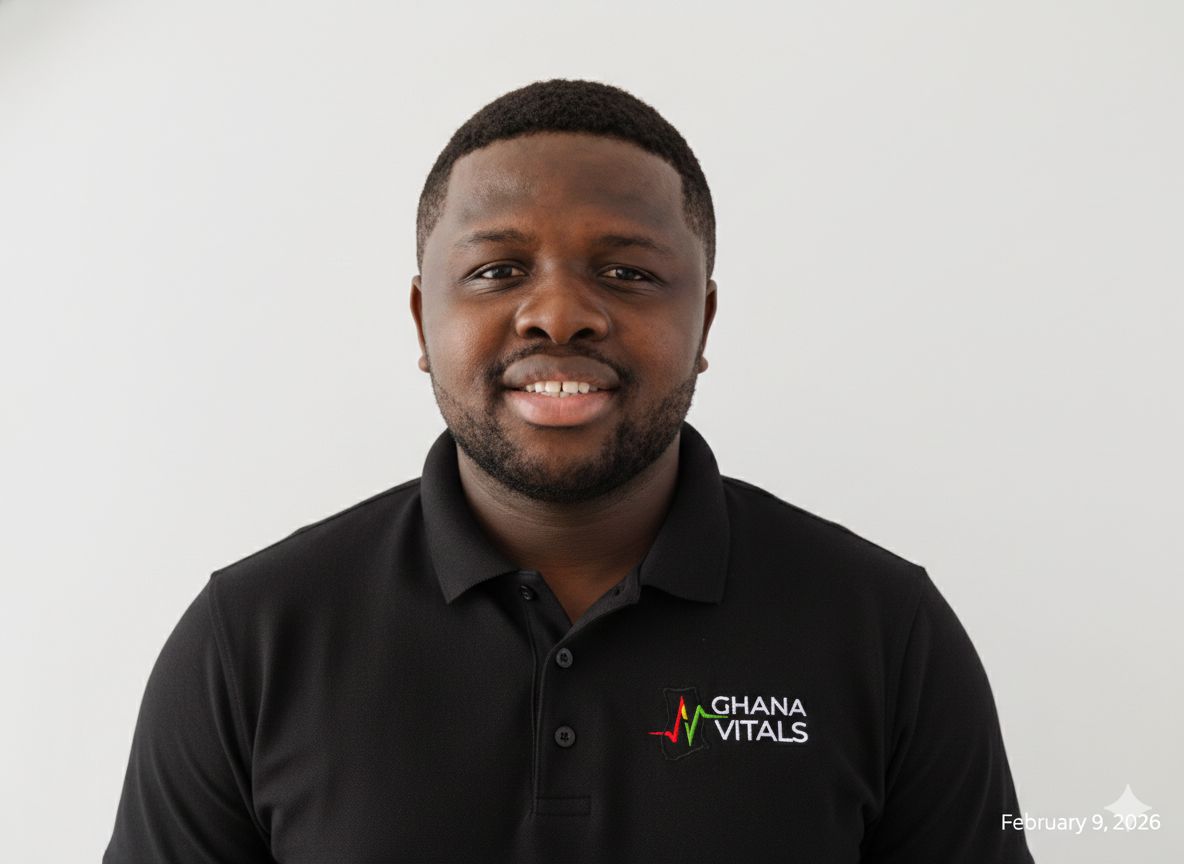
Dr. Festus K. Kunde
Dr. Festus Kaasung Kunde is a medical doctor, Content creator, healthcare technology writer, and digital health innovator specializing in Artificial Intelligence in Medicine, Healthcare Systems Innovation, and Health Data Science in Africa. He is the founder of AI Doctor Africa (AIDoctorAfrica.com), an educational platform dedicated to helping healthcare professionals—including doctors, medical students, nurses, and researchers—understand and responsibly apply artificial intelligence in clinical practice, medical education, medical research, and healthcare innovation. He is also the creator of Ghana Vitals, a health data and predictive analytics initiative focused on collecting and analyzing key health indicators such as blood pressure, blood glucose, and BMI to support early disease detection, preventive healthcare, and data-driven decision-making in Ghana and across Africa. The project reflects his long-term vision of building scalable, AI-powered public health systems for African populations. Dr. Kunde’s work focuses on the practical integration of AI tools such as ChatGPT, Claude, and emerging clinical AI systems into real-world healthcare workflows. His content emphasizes improving clinical documentation, accelerating medical education, strengthening research productivity, and supporting healthcare decision-making in resource-limited settings. Through AI Doctor Africa, he publishes evidence-informed, practice-oriented resources including AI workflows, clinical use cases, medical education guides, and tutorials designed specifically for African healthcare professionals. Through Ghana Vitals, he extends this mission into population health innovation, aiming to leverage real-world health data and predictive models to improve early intervention, reduce preventable disease burden, and strengthen health systems across Africa. His overall mission is to bridge the gap between traditional clinical medicine, artificial intelligence, and data-driven public health, empowering African healthcare professionals to work smarter, diagnose earlier, and deliver better care through technology. Areas of Expertise Artificial Intelligence in Clinical Medicine Digital Health & Healthcare Innovation in Africa Health Data Analytics & Predictive Health Systems Medical Education and Exam Preparation AI for Medical Research and Scientific Writing Clinical Workflow Optimization using AI Tools Public Health Data Systems (Ghana Vitals Initiative) Professional Focus Dr. Kunde’s work sits at the intersection of clinical medicine, artificial intelligence, and population health systems, with a strong focus on scalable solutions for African healthcare challenges. His initiatives emphasize ethical AI use, data-driven decision-making, and practical implementation in real-world clinical and public health environments.
View author profile →